Research and Projects
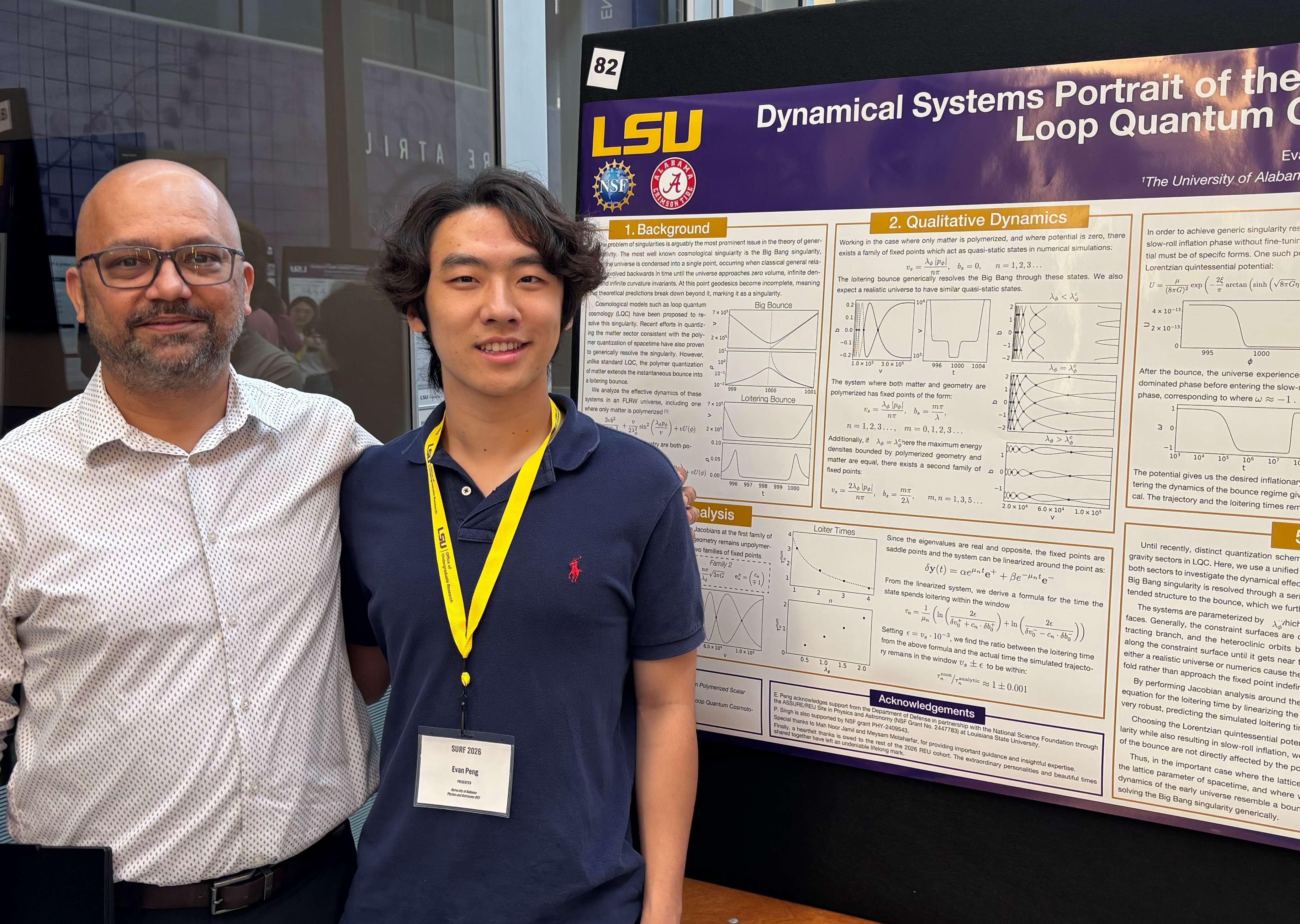
Dynamical Systems Portrait of the Bounce in Loop Quantum Cosmology
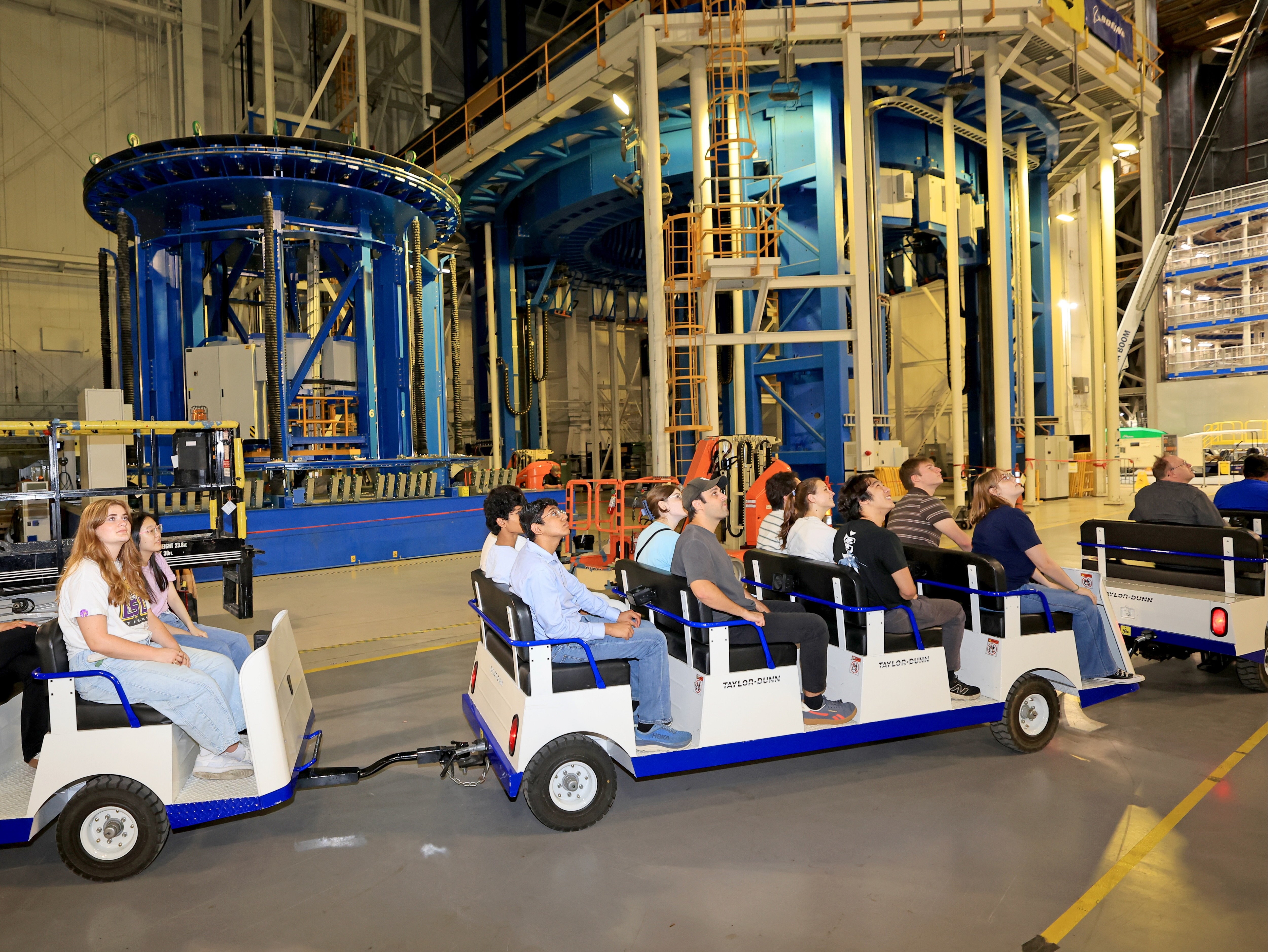
LSU Physics and Astronomy REU: Summer 2026
Advisor: Dr. Parampreet Singh
In this research project, I worked with Dr. Parampreet Singh on a new cosmological model based on Loop Quantum Cosmology (LQC). In this new model, there exist new “loitering states” which replaces the standard Big bounce in LQC. My project was on performing a Jacobian analysis around the fixed points that make up these “loitering states”.
I developed background in standard LQC, where I leared the ADM formalism for general relativity, the WDW cannonical quantization of gravity, Ashtekar variables, the holonomy-flux algebra, and polymer quantization.
Then I worked with the classical effective Hamiltonian which approximates this new cosmological model, deriving the equations of motion and performing the Jacobian analysis on the fixed points. I focused on the stability of the fixed points, during which, we derived a novel equation describing the “loitering time” of the universe around each fixed point.
I then developed the simulator using SciPy to numerically evolve the system using the classical effective Hamiltonian. Our analytical results were then verified based on the numerical evolution. I presented these results at the Summer Undergradaute Research Fourm at LSU, and I am now currently working on the manuscript to be published.
SingAura: AI Voice Coach
University of Alabama: Fall 2024-Present
Advisor: Dr. Yi Lin
In this project, we are developing a wearable sensor array to visualize the normally invisible physical processes that are a part of proper singing technique. This device is aimed at giving vocal students and instructors real-time biofeedback help students gain the body awareness, that traditionally takes years to master.
In this project, I personally developed the majority of the first hardware prototype that is now under a provisional patent. This included choosing, calibrating, and testing a variety of different sensors. I performed multiple rounds of variable control tests to find the most optimal arrangement of the sensors on the body. This resulted in a device that can differentiate different forms of breathing, along with recording cavity expansion and muscle engagment in different areas of the torso.
I led multiple undergraduate students through the development of the subsequent prototypes. I currently am working on writing manuscripts based on the hardware prototypes that we developed.